Posts tagged "career"

Thoughts on LLMs in software engineering

The “catastrophe scenario” of AI in the software engineering job market has gained quite a lot of popularity, with people pointing out that current models already “do a better job” (what does that even mean?) than many professional programmers. I’m not sure I completely buy into this.

AI and the joy of programming

The LLM hype and AI bubble seem unfazed by 2026. If anything, it seems to be getting stronger with no end in sight. One thing I don’t see discussed often, though, are the long-term effects of LLMs on the joy of programming.

Lets assume that the current trend regarding LLM’s ever-increasing adoption holds for a long time, and we end up in a future where “programming” is assumed to be tantamount to operating the slot machine of future-Claude until it spits out the finished product your boss wants (or he’ll do it himself, doesn’t matter).

With that future in mind, I ask myself two questions: Will people still enjoy programming, and is that even programming in the first place?

I’d argue the answer is No for both.

I fear the endgame of LLM coding agents is to empower people who do not like coding, to the detriment of those who do. Even if you used to like coding, you will probably like it less over time because of AI.[1]

So we seem stuck in a kind of cycle: immensely powerful economic and political incentives push AI coding, which makes coding less enjoyable, empowering people who don’t like coding to become more visible in the software industry, driving higher adoption of AI coding, making coding less enjoyable again, and so on.

Its safe to say most people on the planet do not enjoy coding. That is obvious and not a problem. However, a small fraction of people do enjoy coding. I’m not thinking of Leetcoders or the typical FAANG software developer. I’m thinking of the demoscene, 64k competitions and coding golf, as well as more mundane programming language dojos and web framework conferences. I’m thinking of people that enjoy programming and are good at it - and are paid to use their talent.

In this AI-first future, I don’t see those people thriving as they did until now. Technical mastery and artistic brilliance seem to lose their luster in this hypothetical future of perfect answers. It becomes a kind of tree-falling-in-the-forest thing. If you rack your brain for weeks writing a ray tracer for your thermostat only to find out AI has already done it tenfold better? Will it still be fun, or will it be disheartening? Will it even make sense to have a code golf competition if all the winning entries are from AI bots? Will it be fun?

Some enthusiasts will surely always exist, of course. There are still people that ride horses for pleasure and for a living. But the industry won’t need them like it does now. Those who dislike or are indifferent to programming will have taken over.

Of course, this problem is larger than just programming, with all kinds of professions, hobbies and human activities in general suffering in much the same way.

This is just one possible future. I hope it doesn’t come to pass, because I, for one, enjoy programming.


[1] Reviewing code is much less enjoyable than writing code, and you don’t learn nearly as much. Letting AI agents loose and reviewing their changes is supremely boring.

Analyzing LinkedIn's data export: what happened in 2021?

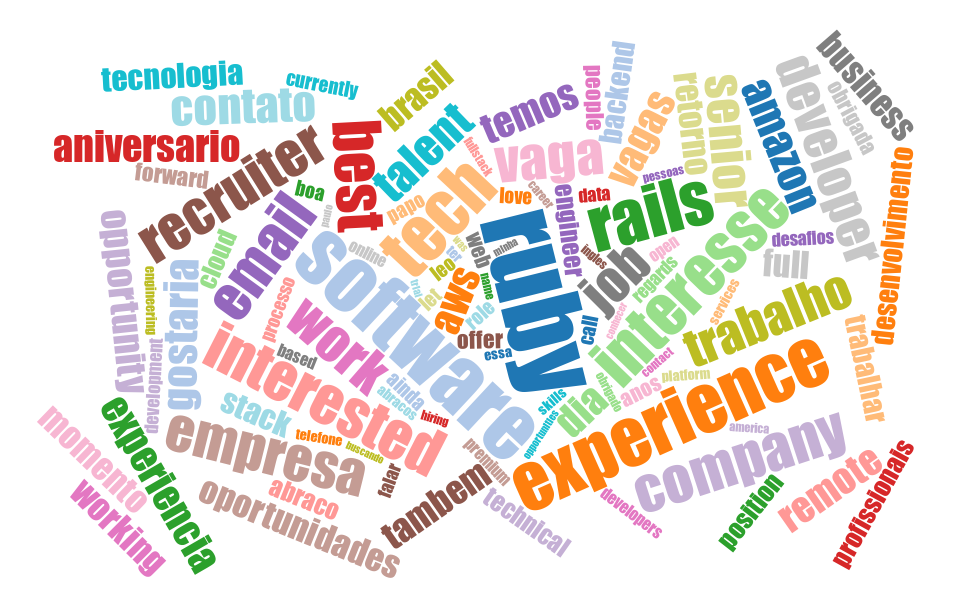
I’ve been using LinkedIn basically since I started working as an intern back in 2012. My usage is mostly limited to posting my blog posts, except the couple of times I used the platform to search for a new job. So most of the time, LinkedIn has been pretty slow-paced, with maybe half a dozen random recruiters reaching out per year.

However, since the Covid-19 pandemic started, and particularly in 2021, things seem to have gone a little crazy, with a lot more recruiter activity. I was curious to see just how much things had changed, so I looked at LinkedIn’s data export.

Communication tips for remote developers

We're all remote -- for now.

Communicating well with your co-workers and managers is supremely important to a software developer, and even more so for the remote one. With a lot more remote workers due to the COVID-19 pandemic, this topic became a lot more relevant.

I’ve seen people hint at this more than a few times over the years, but I didn’t really “get it” until I started working as a fully remote engineer. I also find it important to understand not only what we should be doing to achieve efficient communication, but also why we should be doing those things in those ways.

To me, the single most important thing to keep in mind is that people’s mental resources: time, attention span, etc, like yours, are limited.

Botched interviews

Here’s something I’ve been wanting to write for a while: all the times (the ones I can remember, anyway) I bombed a software engineer job interview. There are so many “how I aced interviewing at X”/”how to pass X interview” floating around that I thought the opposite story would make for an amusing read.

My first developer job was as an intern at a big tech company in 2012. I think that was one of the worst interviews I’ve had, by the way – I could barely understand the interviewer over the cellphone, and those were the days of “how many piano players are there in New York”-kind of questions. I thought it went terrible, but I got the job somehow. On the other hand I’ve had many interviews I thought I did great but bombed anyway.

Onsites considered harmful

A couple of years ago I interviewed at one of the largest Ruby shops out there. Screening went well, and some days later I was invited for an onsite.

These were the good old pre-covid days, so an onsite really meant onsite. You had to travel to the office, wherever that was.

The thing is, an onsite is actually radically different depending on where you live. It follows that onsites introduce further bias into our industry’s already problematic hiring process. I’d like to argue that although onsites have some advantages, they’re mostly a waste of time (and money).

Leaving Amazon

OpenAI is so much fun!

I’d like to preface this by stating that Amazon is obviously a huge company, and my opinions are just that, one person’s opinions. There will probably be some people that share my frustrations while others have had a completely different experience.

I interviewed at AWS in early 2020, pre-pandemic. The interview process is grueling and I spent considerable effort preparing for the 5-hours-long pantomime of absurd algorithms trivia and “tell me a time when you said no” behavioral questions. COVID-induced visa processing delays pushed my start date forward in time many times. The high-stress interview process and years-spanning wait built up tremendous anticipation. In hindsight I can say I probably had somewhat unrealistic expectations when finally joining the company in late 2021.

Regardless, I was quite frankly shocked after my first couple of weeks, and my first impression was that this kind of work was not for me. As a software engineer, I expected to eventually do some software engineering. I’m not sure how to describe the work that first team I joined was doing, but I can’t in good conscious call it software engineering.

Are "digital nomad visas" a thing yet?

Immigration sucks. In addition to the personal toll it takes on anyone, it is also mind-numbingly tedious and baroquely complex. Why aren’t things better by now?

This reminded me of the so-called “digital nomad visas”. Searching for that term will get you a thousand clickbaitey Wordpress sites with the “20 best countries with nomad visas” or whatever. But how real are they really?